
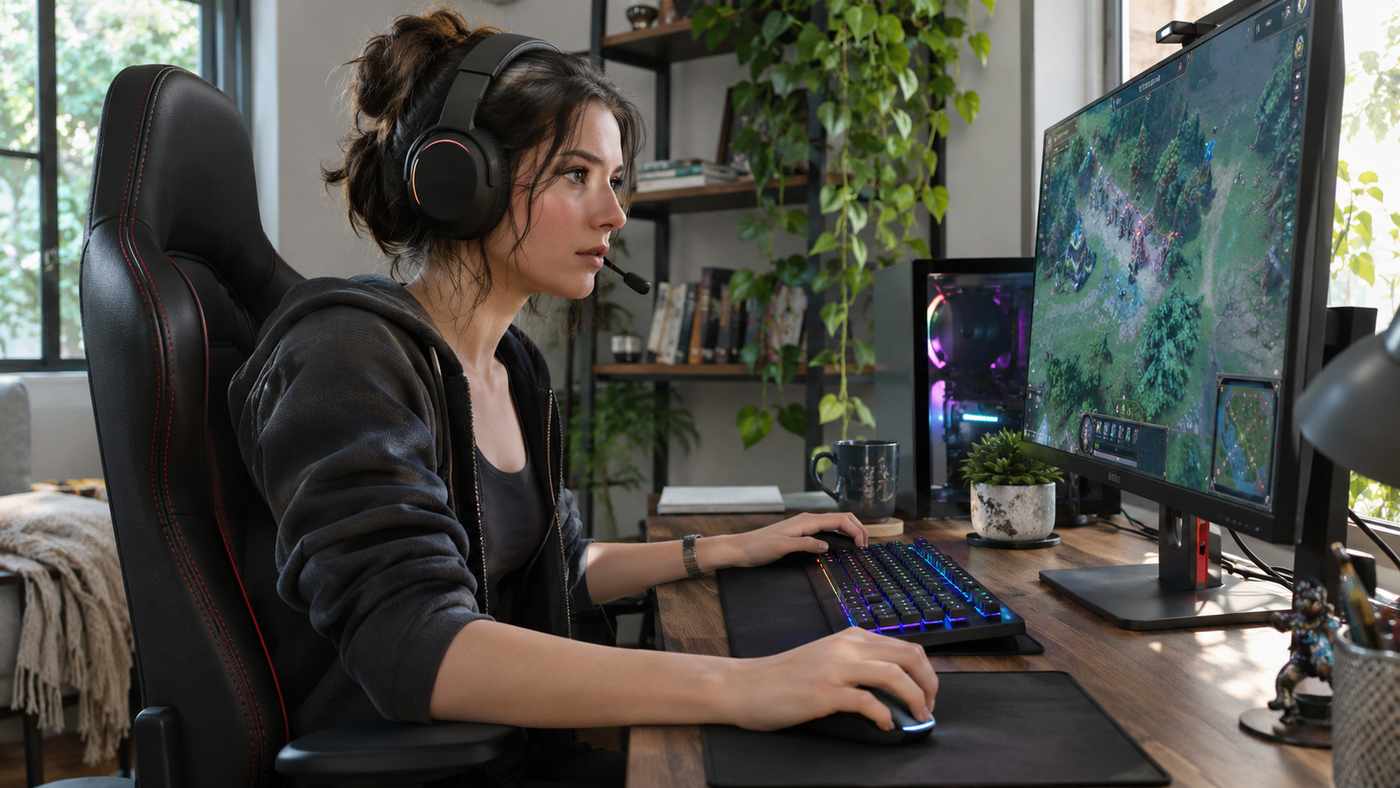
Mobile technology and online tournaments are changing how people experience competitive activities. Traditional sports have long relied on physical performance, organized leagues, and established rules. Digital gaming now offers another way to compete, with players testing their abilities through strategy, quick reactions, and decision-making. This development is encouraging wider discussions about what qualifies as sporting participation.
The growth of esports and platforms offering skill games online reflects this changing environment. Participants can compete against others without entering a physical sporting venue. While these activities share certain characteristics with traditional sports, important differences remain. Understanding both sides helps explain how digital competition is reshaping modern sporting culture.
Why Traditional Sports Still Define Competitive Excellence
Traditional sports combine physical ability, structured training, and established competition rules. Activities such as football, basketball, and athletics require participants to develop strength, coordination, endurance, and technical skills. Performance depends on consistent preparation and the ability to respond under pressure.
Organizations such as the International Olympic Committee (IOC) oversee major sporting competitions through established governance structures. Athletes generally follow formal qualification procedures, while coaches help improve technique and tactical awareness.
Physical participation also provides important health benefits. The World Health Organization (WHO) identifies regular physical activity as a contributor to cardiovascular health, improved mental well-being, and reduced risks of several chronic diseases. These benefits remain an important distinction between conventional athletics and screen-based competition.
What Changes When Competition Moves Online?
Digital competitions introduce different environments where players demonstrate skill through electronic interfaces. Rather than running across a field, competitors navigate virtual spaces, manage resources, or respond to changing situations on a screen.
Competitive games such as League of Legends and Counter-Strike require coordination, tactical planning, and rapid decision-making. Individual performance can depend on concentration, timing, and familiarity with complex game mechanics.
A 2026 scoping review published in PLOS ONE examined relationships between esports participation and cognitive function. It identified attention, decision-making, and perceptual processing as relevant areas of investigation, while emphasizing the need for stronger research before drawing broad conclusions.
Digital access also changes participation. Online matches can connect competitors across geographical boundaries. However, reliable internet connections, suitable devices, and accessible software remain important requirements.
Physical Strength Versus Digital Precision: How Do Skills Compare?
Training and Preparation
Both competitive environments reward disciplined practice. Traditional athletes develop physical conditioning alongside technical abilities. Digital competitors often concentrate on reaction speed, strategic understanding, and precise control.
Research published in BMC Psychology in 2026 examined how cognitive-motor training relates to reaction time and decision-making among esports competitors. Such studies demonstrate growing scientific interest in structured digital performance training.
Measuring Competitive Performance
Physical sports measure achievement through goals, distances, times, and other established indicators. Digital competitions use rankings, scores, match results, and game-specific statistics.
Both systems provide measurable outcomes. However, digital performance can also be affected by network latency, hardware differences, software updates, and game balance. These variables create additional challenges for organizers seeking consistent competitive conditions.
How Online Platforms Organize Competitive Participation
Online gaming platforms provide structures that resemble organized sporting competitions. Participants may enter individual matches, join ranked competitions, or advance through tournament brackets.
Common competitive formats include:
- Head-to-head matches where participants compete directly against another player.
- Ranked competitions that measure performance across multiple sessions.
- Tournaments that use qualification rounds and elimination stages.
- Performance-based challenges where scores reflect accuracy, speed, or strategic execution.
The International Esports Federation (IESF) maintains competition rules and integrity standards for organized esports events. Its regulations address fair play, participant conduct, and anti-doping measures.
However, competitive gaming platforms operate under different models. Casual gaming services, professional esports organizations, and prize-based competitions should not automatically be treated as equivalent.
Should Digital Competition Qualify as Sport?
The question of sporting legitimacy remains unsettled. Supporters argue that organized esports demonstrates several familiar sporting characteristics, including skill development, teamwork, coaching, competition rules, and measurable results.
The IOC approved the creation of the Olympic Esports Games in July 2024. This decision demonstrated growing institutional interest in digital competition without resolving every debate about sporting classification.
Critics emphasize the importance of physical movement and bodily performance. They argue that screen-based competitions differ fundamentally from activities requiring substantial physical exertion.
Research discussed by the Australian Sports Commission recognizes the continuing debate over esports classification. Its examination of sporting definitions highlights how institutional recognition and physical requirements influence the discussion.
A separate competitive category may therefore offer a practical compromise. Digital competitions can receive recognition without requiring traditional sports to abandon their defining characteristics.
When Does Competitive Gaming Raise Gambling Concerns?
Financial arrangements introduce another important distinction. Some competitions are free, while others involve entry fees, monetary prizes, or chance-based rewards. These financial elements raise questions about risk, especially when participants stake money on uncertain outcomes.
Similar concerns appear in traditional wagering, where sports betting risk management involves evaluating potential losses and strategies such as hedging. Although hedging can reduce exposure to certain outcomes, it does not guarantee profits or eliminate financial risk.
The UK Gambling Commission distinguishes genuine skill competitions from certain gambling activities. Under British law, the influence of chance and the structure of a competition can affect its legal classification.
Paying an entry fee does not automatically make an activity gambling. However, organizers must consider whether outcomes depend predominantly on skill or involve legally significant elements of chance.
Rules also differ between jurisdictions. Platforms offering monetary rewards may face licensing requirements, age restrictions, consumer protection obligations, and advertising regulations.
Transparent scoring, clear participation terms, and responsible financial practices help protect competitors. Players should understand potential costs before entering prize-based events.
A Broader Future for Competitive Participation
Online gaming is expanding opportunities for people to experience organized competition. Digital platforms offer alternative ways to demonstrate skill, build communities, and participate in structured tournaments.
Traditional athletics will continue to serve important physical, social, and cultural purposes. Digital competitions bring different strengths, particularly in strategic thinking, accessibility, and technological innovation.
The future may depend less on deciding which format deserves superiority and more on establishing fair standards for each. As gaming technology develops, sporting organizations, regulators, and participants will need to reconsider how competition is defined, governed, and experienced.